Pages

Saturday, October 15, 2011

Lamb Kefta Tagine with Tomatoes and Couscous

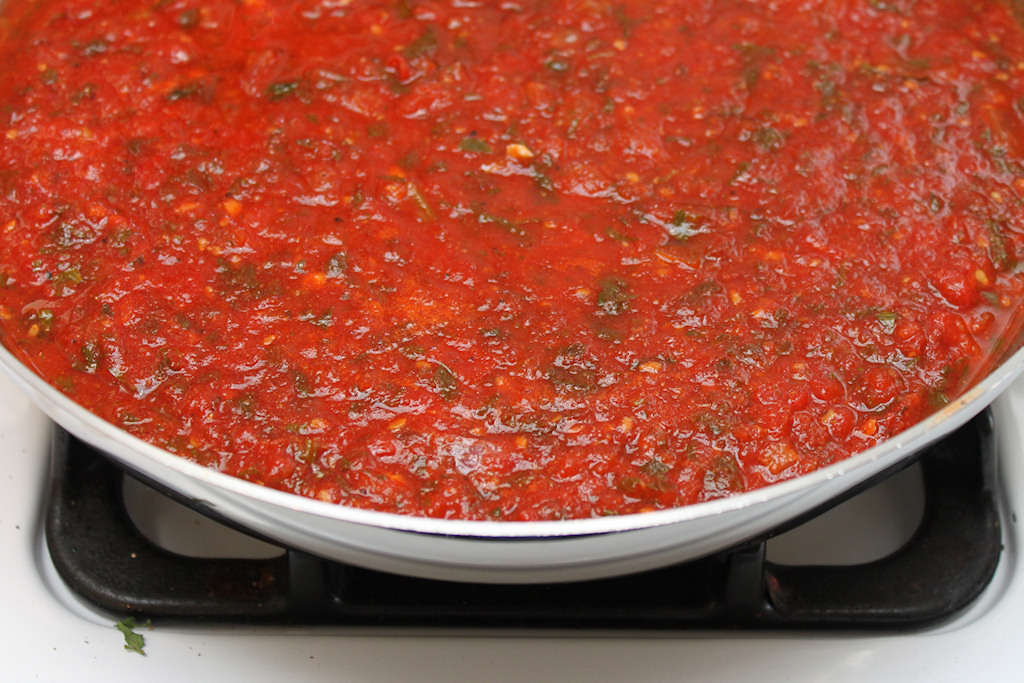
I meant to make this last week but ran out of time and stuck the lamb back in the freezer. A friend came to visit this weekend from afar - 17 hour plane ride. We had a lot of catching up to do and I didn't want to be fussing around. I don't multi-task all that well: I can cook a lot or I can talk a lot but I can't do both and I wanted to do the latter but have a good meal. I made this in about an hour, headed down to the airport and when we got back, reheated it, made the couscous, heated up some pita bread in the oven, made a simple salad of greens and vinaigrette and dinner was ready in about 20 minutes.


This is a dinner that you can cook in parts - sauce first - and store it before making the meatballs. It was eaten fast enough that I didn't have any left over to freeze, but I'm guessing it would store very well.


The only part that requires about 20 minutes of continuous effort is making the meatballs. The original recipe specified that the meatballs be the size of large cherries. I made mine about 1" in diameter and added an egg - also not called-for in the original recipe. I used a small ice cream scoop to portion the meatballs. This recipe is a definite keeper and when tomatoes aren't in season, canned will do just fine.

RECIPE: LAMB KEFTA TAGINE WITH TOMATOES and COUSCOUS

Friday, October 14, 2011

Friday Dinner: Baked Ziti with Tomato, Mozzarella and Sausage

 The original recipe says that it will serve 4, but you can easily cut it in half to serve that many, especially if you extend it by adding some extra meat (left-over pot roast from last week), as we did.

Lynn found this recipe and we both like it for several reasons: mixing the seasoned ricotta with the cooked pasta - while the pasta is still warm, before assembling the remainder of the dish distributes the ricotta mixture beautifully throughout, it's not overly sauce-y, and it tastes great when you augment the sausage with leftover meat. In this case left-over roast beef, but we've also used pork.


Oh yes - and it's really delicious.

 If you assemble it before-hand (over an hour or more before the final baking), I recommend making it saucy-er as the pasta will absorb a good deal of the liquids. If you're planning on sticking it in the oven right after assembly, you're good to go.
Lynn hasn't added the mountain o'mozzarella yet and you can see how much there is in the pan already!
It doesn't take very long to cook once you've assembled it, it's just a matter of heating everything up and melting the cheese.


RECIPE: BAKED ZITI with TOMATO MOZZARELLA, SAUSAGE and ROAST BEEF

Thursday, October 13, 2011

Sweet Sunday: Orange Ginger Torte: A Long Post for a Short Recipe

Murcott Tangerines
!WARNING!: this is a long post. You can skip down to the jump for the recipe. Or read on for:
  1. How I will manage to make baked goods and desserts on a weekly basis without guilt; and
  2. How I tussled through two iterations of possibly one of the shortest recipes other than, "Apple: wash, eat".
Torte Version #2 Plated: Made with Murcott tangerines. The only sugar I had was an organic unrefined,
unbleached, cane sugar which produced a deeply browned exterior. It also photographed a little darker than it actually looked.

Consider the following:
  • I am much more confident in my savory cooking than in baking or desserts and I would like more practice, but... 
  • I should not have left-over desserts or baked goods, hanging out in my house and calling to me like the Sirens
What to do? Until now, I'd only make desserts for a dinner party or other special occasion and send left-overs home with guests. A few weeks ago I had an ah-ha moment: the church a friend of mine attends serves food after services. A few years ago, I sent a test batch of vegan, chai cupcakes along with her (they liked them). A few weeks ago I asked her if I could make a dessert at the end of the week and send everything with her except for a serving for me to taste (and one for her). Eureka!. Now we have "Sweet Sunday".
Torte Version #1 Plated: This was made with regular white sugar and glazed with a thin mixture of
orange zest, orange juice and sugar.
Unlike savory cooking where I'm generally fearless and understand what's going on and why something works (or doesn't), I don't have that deep experience with desserts and baking. This means more copious head notes in my posts (as if I weren't wordy already!) which I hope are helpful for at least some who read. If it's all old hat to you, just nip on down to the jump link and go right to the recipe.
Torte #1 after an hour of baking. Looks fine on the outside, but the interior was mushy, still.

For the first round of Sweet Sunday, I made an orange ginger torte which has a very sexy, seductive aroma and taste. It has a short list of ingredients: oranges, eggs, sugar, almond meal, ginger (both fresh and candied) and baking powder. I ended up making it twice. The first time the end result, once I got through all of the trials and tribulations, tasted good, but I couldn't post it until I addressed the issues and questions I had or at the very least understood why I ran into problems and made it a second time with adjustments, and I will definitely make it again. I'll note this again in the recipe, but I really think this torte tastes better after the first day and on the third day it was even better - just wrap tightly and store in the refrigerator.

#1: How BIG is Small? ...Because Size Does Matter
  • After I made it the first time the first thing I came to learn was that your idea of a small, medium or large orange may differ from mine and this is a perfect example of why weight is a better way to measure, especially in baking. The recipe called for 2 large or 3 small oranges. I had several Moro blood oranges and 3 of them that I considered small. The cake took two hours to fully cook instead of the one called for in the recipe. After the first hour, the insides were like oatmeal. I emailed the author (Clotilde Dusoulier of "Chocolate & Zucchini" fame - a very good blog, full of delicious, interesting recipes and good information) and she was gracious enough to update the recipe with the weight (1 1/3 lbs for the oranges) and also give a really useful description of how the crumb should appear in the post's comments. She has been blogging for years and her site and recipes are very popular - for good reason -  so there are generally many comments per post. Not all bloggers respond to questions, but she does - and did respond to mine even though the original post was from 2004!
#2 The Right Citrus for the Job
  • I did some research and found that most of the similar recipes were called "Clementine Cake"  and generally called for Clementine oranges (a mandarin hybrid).  Also, I think blood oranges aren't my preferred choice for this torte. They often are a bit dear and I think the special taste and aroma qualities of a blood orange is lost in baking - at least in this torte. When you get your hands on a good blood orange, it is a wonder and not just for the beautifully hued flesh and peel. I can find essence of roses and other floral aromas in the flesh and they are wonderfully juicy.
    Torte Version #2: The recipe from which I started called for a topping of pearl sugar combined with lemon juice and zest. I opted for a glaze made with powdered sugar, orange juice and zest, topped with toasted almonds.

    I think this cake tastes better using an orange with less pith. Less pith=larger ratio of flesh and outside skin (zest) to pith. The second time around, I used 1 1/4 lbs of Murcott tangerines. Murcott tangerines are marketed in some areas as "Honey Tangerines" and are sometimes called Murcott Mandarins (see: UCR College of Natural and Agricultural Science's Citrus Variety Collection- I love this reference site). They are delicious to eat with a bright, sweet flavor and a great aroma. I rarely encounter a seed but cut mine in half horizontally to look for any before I pureed them. I think any thin-skinned mandarin or tangerine with great taste and a thin pith would work just fine.
#3 What is it supposed to look like?
  • Ms. Dusoulier's comment, "...one thing I want to note is that this cake remains a very moist one, even when fully baked. The crumb should feel like it's been soaked in syrup" was so helpful because I wasn't sure. I know tortes made with nut meals or flours will not have the same kind of crumb as a cake or quick bread, but I really didn't know what to expect. Her comment made perfect sense to me and I knew, for my second go-round that it was properly finished.
#4 One last thing - I swear it's the last note.
  • The first time I made it I used a coarse-ground almond meal and the second time, I used a fine-ground almond meal - more flour-like. I didn't see an appreciable difference so use what you have or can get your hands on. I used Bob's Red Mill almond meal both times. 
On to the...
RECIPE: ORANGE GINGER TORTE

Friday, October 7, 2011

Friday Dinner: Pot Roast, Mashed Potatoes, Garlic Green Beans and Brussels Sprout Salad


...and gravy - the most beautiful dark, rich and silky gravy I've seen in quite a while. Individually and together Lynn (my fearless Friday night cooking confederate), and I have made many a pot roast, other braised beast or stew. We KNOW our braised meats and stews - the aromatics, the herbs, the liquids, the sauce and layering of flavors and this last Friday's pot roast was one for the hall o'fame. Some recipes call for chuck OR meat from the round, but we think that nothing beats meat from the chuck for a pot roast. It can be boneless or bone-in.
From: Wikipedia


The Friday before we cooked this meal, we were out to dinner with some friends from Florida and I had a side of green beans. "Okay, green beans. And...?" Both of us add pressed garlic to the last stage of cooking, tossing it with the beans - they are always damned good, but these green beans had tiny flecks of garlic all over each bean. They wore a dusting of a fine brunoise of garlic that absolutely made its presence known, but didn't get in the way of the bean flavor. A fine brunoise is a cut that is 1/16" x 1/16" of an inch. This, rather than a paste, makes total bean coverage possible. They tasted fantastic so we did the same to our beans.

I used 2 medium cloves of garlic for the amount of beans we prepared. Was it worth the effort? I'm a very happy camper when I'm holding a chef's knife, slicing, dicing, mincing or brunoise-ing my way through a big pile of produce so I'm inclined to pick up a knife in any case, but yeah, it was worth it. Any time you want this kind of garlic coverage, this is the way to go. I love my 9" chef's knife but this is a job for a smaller, very sharp (of course!) knife.
Shredded (raw) brussels sprouts, sliced, toasted almonds, garlic for the green beans
cut in a fine brunoise, and a paste of 1 clove of garlic for the vinaigrette
 Raw Brussels sprout salad. I love b-sprouts and have cooked them every which way so we figured we'd give a raw salad a shot. Excellent idea! Mustard-y vinaigrette with some aged cheese grated (with a microplane) into the dressing and some extra tossed in at service. Next time, we're going to add some tart apple. For you  Brussels sprouts naysayers out there, raw b-sprouts are quite mild tasting.

RECIPES:
  • Pot Roast
  • Gravy
  • Mashed Potatoes
  • Garlic Green Beans with Toasted Almonds
  • Shredded Raw Brussels Sprout Salad with Mustard Vinaigrette and Aged Cheese

Saturday, October 1, 2011

Saturday Breakfast: Bacon, Tomato and Avocado Breakfast Sandwich

Nothin' special here - except for the taste: toasted English muffin, smashed avocado, sliced Early Girl tomatoes and bacon. Grapes on the side.